
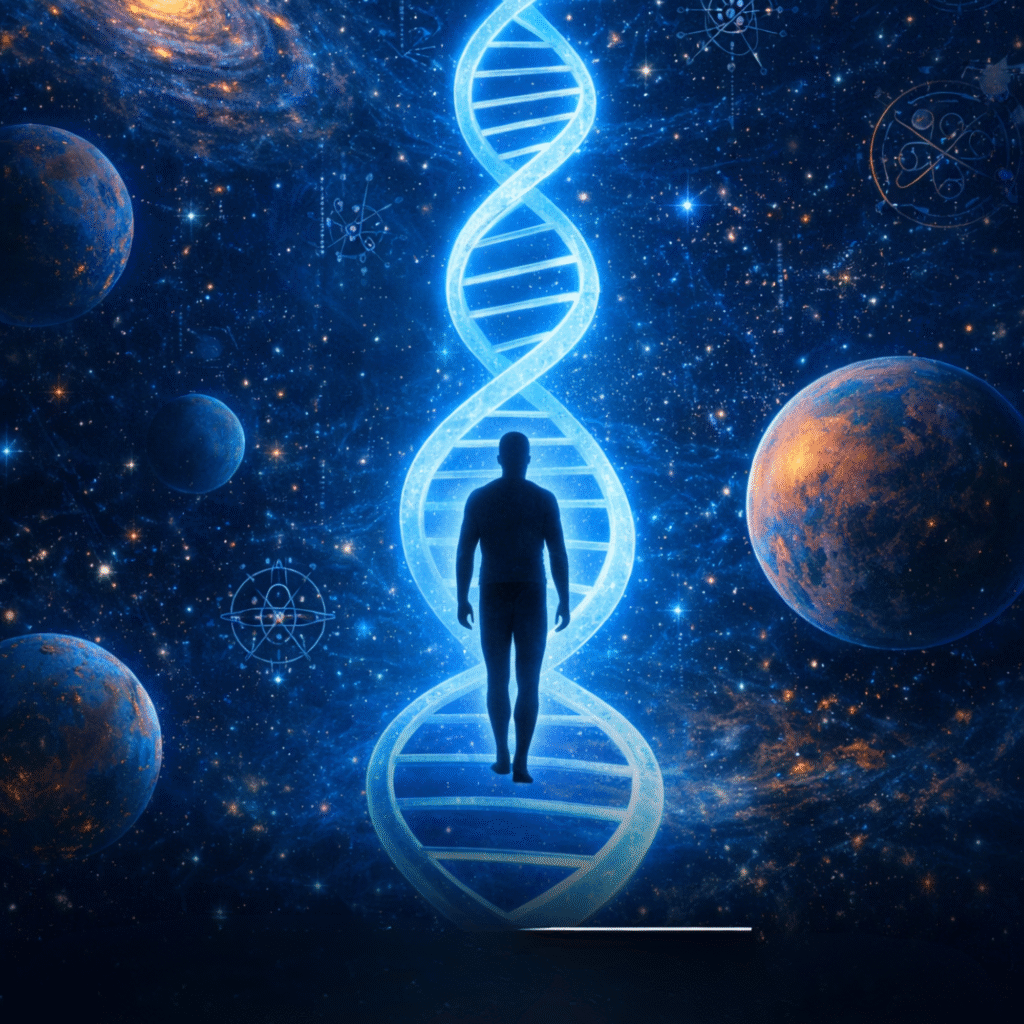

If No One Observes It, Does It Exist? The Biocentrism Controversy
Have you ever wondered, if no one observes it, Does It Exist? The Biocentrism Controversy isn’t just a poetic question—it’s a serious philosophical and scientific debate.If a star explodes in a distant galaxy and no conscious being witnesses it, did it really happen? Or does reality require observation to become real?This question sits at the crossroads of quantum physics, neuroscience, and philosophy. It challenges the deeply rooted assumption that the universe exists independently of us. In this fully optimized guide, we’ll explore the origins, scientific arguments, criticisms, and deeper meaning behind the Biocentrism Controversy—clearly, logically, and without exaggeration.
What Is Biocentrism? Understanding the Core Idea
To Understand: If No One Observes It, Does It Exist? The Biocentrism Controversy, we first need clarity on biocentrism itself.
Biocentrism is a theory proposed by Robert Lanza in his book Biocentrism. The central claim is bold:
- Consciousness is fundamental.
- Space and time are mental constructs.
- Reality depends on observers.
According to this theory, the universe does not create life. Instead, life—and consciousness—create the universe as we experience it.
This reverses the traditional scientific model, where matter comes first and consciousness emerges later.
If No One Observes It, Does It Exist? The Biocentrism Controversy Explained
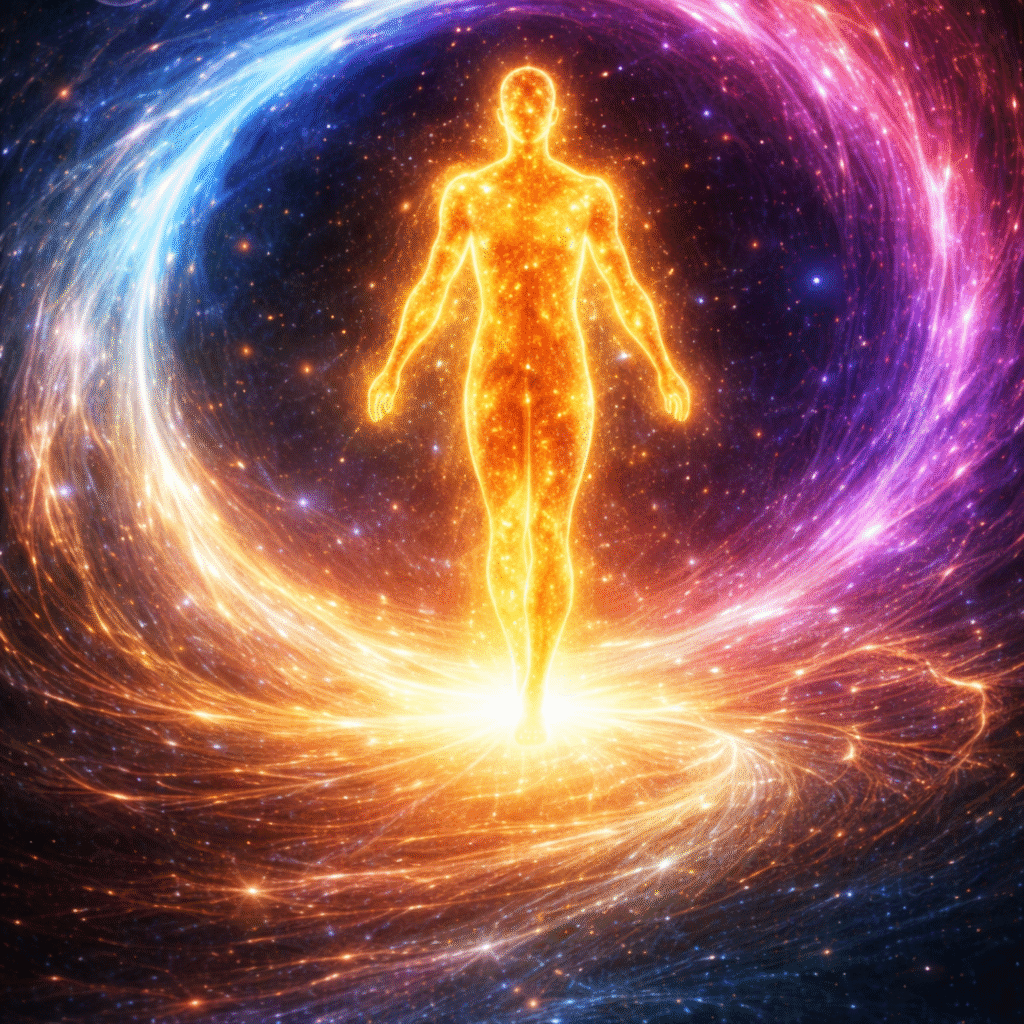
At the heart of the controversy are two competing views:
1. The Realist View (Mainstream Science)
Most physicists and cosmologists argue:
- The universe existed 13.8 billion years before humans.
- Stars formed, galaxies collided, and black holes merged without observers.
- Consciousness emerged from complex biological processes.
Under this view, reality exists independently of observation.
2. The Biocentric View
Biocentrism argues that:
- Reality is observer-dependent.
- The past is reconstructed within present awareness.
- Without consciousness, the universe has no defined form.
This perspective suggests that observation is not passive—it is creative.
The tension between these two views forms the core of The Biocentrism Controversy.
Quantum Physics and the Observer Effect
Much of the debate comes from quantum mechanics.
In experiments like the double-slit experiment, particles behave differently when measured. When not observed, they act like probability waves. When measured, they behave like particles.
Some interpret this as evidence that consciousness creates reality.
However, mainstream physics clarifies something important:
- “Observation” means physical interaction.
- It does not require a conscious mind.
- Measuring devices alone can collapse quantum states.
Even Albert Einstein questioned quantum indeterminacy, but he did not argue that human consciousness creates the universe.
This distinction is crucial in understanding If No One Observes It, Does It Exist? The Biocentrism Controversy. Many viral interpretations blur the difference between measurement and awareness.
Neuroscience vs Biocentrism: Does the Brain Create Consciousness?
Another major challenge to biocentrism comes from neuroscience.
Research consistently shows:
- Brain injuries alter perception.
- Chemical changes affect awareness.
- Neural activity correlates with conscious experience.
These findings suggest consciousness depends on the brain—and therefore on physical matter.
If the brain generates consciousness, then matter precedes mind. This directly challenges the biocentric claim that consciousness is fundamental.
For critics, this is one of the strongest objections in the Biocentrism Controversy.
Cosmology and the Pre-Conscious Universe Problem
Cosmology presents another difficulty.
The cosmic microwave background radiation provides evidence of events billions of years before life existed. Telescopes observe distant galaxies whose light traveled millions or billions of years before humans evolved.
If no one observed those early cosmic events, did they not occur?
Biocentrists respond by arguing that the past is constructed within present awareness. Critics argue this position risks sliding into philosophical idealism or even solipsism.
This is where If No One Observes It, Does It Exist? The Biocentrism Controversy becomes more philosophical than scientific.
Key Insights from the Biocentrism Debate
Let’s separate what is scientifically established from what remains open.
What Science Strongly Supports
- The universe predates human consciousness.
- Quantum systems require interaction—not necessarily awareness.
- Consciousness correlates strongly with brain function.
What Remains Unresolved
- Why does consciousness exist at all?
- Is subjective experience reducible to physical processes?
- Is reality fundamentally informational?
- Could consciousness be more basic than we assume?
The controversy survives because science has not fully explained consciousness itself.
Why the Question Feels So Powerful
The emotional force behind If No One Observes It, Does It Exist? The Biocentrism Controversy is hard to ignore.
If consciousness is fundamental, then:
- We are not accidental byproducts.
- The universe is participatory.
- Observation becomes meaningful at a cosmic level.
But emotional appeal does not equal scientific proof.
Still, the question touches something deeper: the mystery of experience itself. Everything we know appears within awareness. We never encounter reality outside perception.
That insight does not prove biocentrism—but it keeps the debate alive.
Is Biocentrism Science or Philosophy?
Most scientists classify biocentrism as speculative philosophy rather than established physics.
It lacks:
- Broad empirical support
- Predictive mathematical models
- Peer-reviewed experimental confirmation
However, it raises legitimate philosophical questions about the interpretation of quantum mechanics and the nature of time.
In that sense, the value of the theory may lie more in provoking inquiry than in replacing current science.
So, If No One Observes It, Does It Exist?
According to mainstream science: Yes.
The universe exists independently of observers.
According to biocentrism: Reality as we know it requires consciousness.
A balanced perspective might say this:
Reality may not require observers to exist.
But the reality we experience always requires awareness.
That subtle distinction reframes the entire debate.
Final Thoughts on The Biocentrism Controversy
If No One Observes It, Does It Exist? The Biocentrism Controversy continues because it challenges the deepest assumptions about existence.
While current scientific evidence supports an observer-independent universe, the mystery of consciousness remains unsolved. Until we fully understand how subjective experience arises, theories like biocentrism will continue to spark debate.
The real power of this controversy lies not in proving that consciousness creates reality—but in forcing us to ask better questions about what reality truly is.
And perhaps that is the most important observation of all.



Pingback: Multiverse Theory: Are You Alive in Another Universe? - wordtopdf.click
Pingback: Dimension: Role in Science, Life, and the Universe - wordtopdf.click