

Introduction
The concept of dimensions is often associated with mathematics or physics, but in reality, dimensions define how every world exists and functions. From the physical objects around us to technology, human consciousness, and even the universe itself, dimensions shape how we perceive and understand reality.
This article explains dimensions in every world, using clear examples and simple language.
What Is a Dimension?
A dimension is a measurable direction or aspect that helps define the structure of something.
In simple terms:
- A dimension tells us how something exists, moves, or is understood.
- More dimensions mean more detail, complexity, and information.
Dimensions in the Physical World
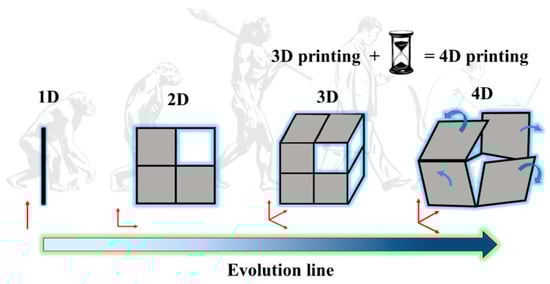
Our everyday physical reality is based on three spatial dimensions:
- Length
- Width
- Height (or depth)
Together with these, time acts as the fourth dimension, allowing change and motion.
Examples:
- A road → one-dimensional (length)
- A table surface → two-dimensional (length + width)
- A building → three-dimensional
- Human life → space + time (4D)
Without time, motion and growth would not exist.
Dimensions in Mathematics
In mathematics, dimensions represent independent directions:
- 1D: Number line
- 2D: Graphs (x, y)
- 3D: Space (x, y, z)
- Higher dimensions: Used in statistics, machine learning, and data science
Each added dimension increases the amount of information that can be represented.
Dimensions in Physics and the Universe
Physics describes reality as four-dimensional spacetime:
- 3 dimensions of space
- 1 dimension of time
Modern scientific theories suggest:
These ideas help scientists explain gravity, cosmic structure, and the origin of the universe.
Dimensions of the Human Mind and Consciousness
Human experience is not limited to physical dimensions. The mind operates across multiple non-physical dimensions, such as:
- Logical thinking
- Emotions
- Creativity
- Spiritual awareness
A problem viewed from only one dimension leads to limited understanding. Multi-dimensional thinking enables better decisions and deeper insight.
Dimensions in Technology and the Digital World
Technology heavily relies on dimensions:
- 2D: Images, websites, user interfaces
- 3D: Video games, simulations, product design
- 4D: Animations and simulations over time
- AI & Data Science: Each variable or feature is a dimension
Higher-dimensional data allows smarter systems but requires advanced processing.
Dimensions in Art and Creativity
Art evolves with dimensions:
- 2D art: Painting, photography
- 3D art: Sculpture, architecture
- 4D art: Animation, interactive installations (time-based)
Art becomes more powerful when it engages multiple dimensions simultaneously.
Philosophical and Multiverse Perspective
Philosophically, dimensions raise a fundamental question:
Is our reality limited to only what we can perceive?
Multiverse theories suggest:
- Multiple realities may exist in different dimensions
- Each reality could follow different physical laws
While still theoretical, these ideas expand how we define existence itself.
Why Dimensions Matter
Dimensions influence:
- How we measure reality
- How technology evolves
- How humans think and create
- How the universe is structured
Understanding dimensions helps us see the world beyond surface-level perception.
Conclusion
Dimensions are not just scientific concepts—they are the framework of reality. From physical space to digital systems and human consciousness, every world exists through dimensions.
The more dimensions we understand, the deeper our understanding of reality becomes.



Pingback: AI Innovations Shaping the Modern World - wordtopdf.click
Pingback: Not Getting Enough Sleep? Here’s What Science Says - wordtopdf.click
Thank you for your comment. Evidence shows that deprivation can strongly impact the prefrontal cortex, which governs decision-making and self-control.